Plantation Shutters vs. Cellular Shades for Energy Efficiency: Which Works Better?
Looking to improve your home’s energy efficiency? Plantation shutters and cellular shades are two of the best window treatments for reducing heat transfer and lowering energy bills.
This guide compares their insulation, year-round performance, and overall value so you can choose the right fit for your home.
How Each Window Treatment Works
Rigid materials physically block drafts
Plantation Shutters
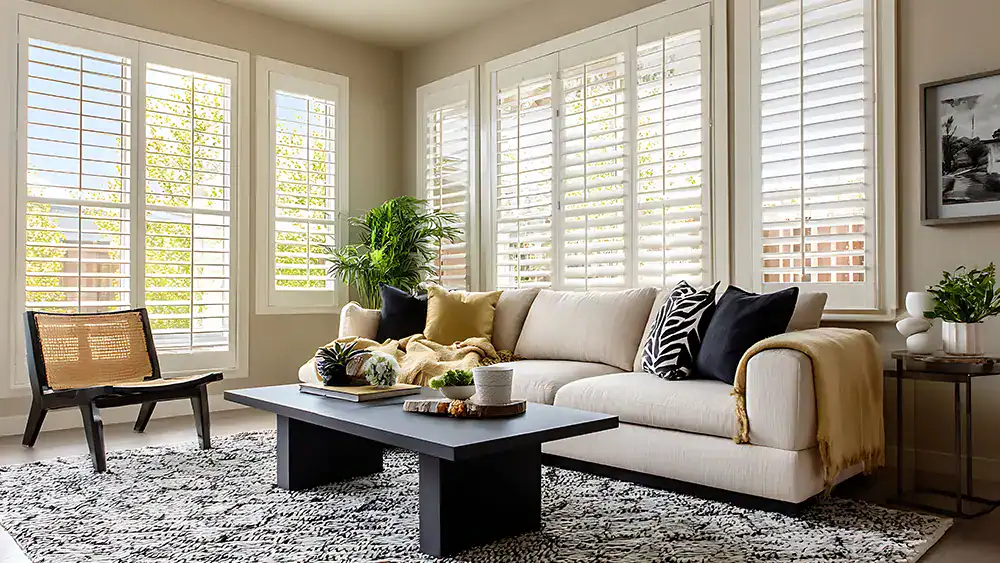
Plantation shutters are solid window treatments usually made from wood, faux wood, or composite materials. They feature a sturdy frame and wide, adjustable louvers.
- Solid barrier: Rigid materials physically block drafts.
- Tight fit: They’re custom-built to mount securely within or around the window frame, minimizing air gaps.
- Adjustability: You can tilt the louvers to control airflow while still blocking direct sunlight.
Cellular Shades
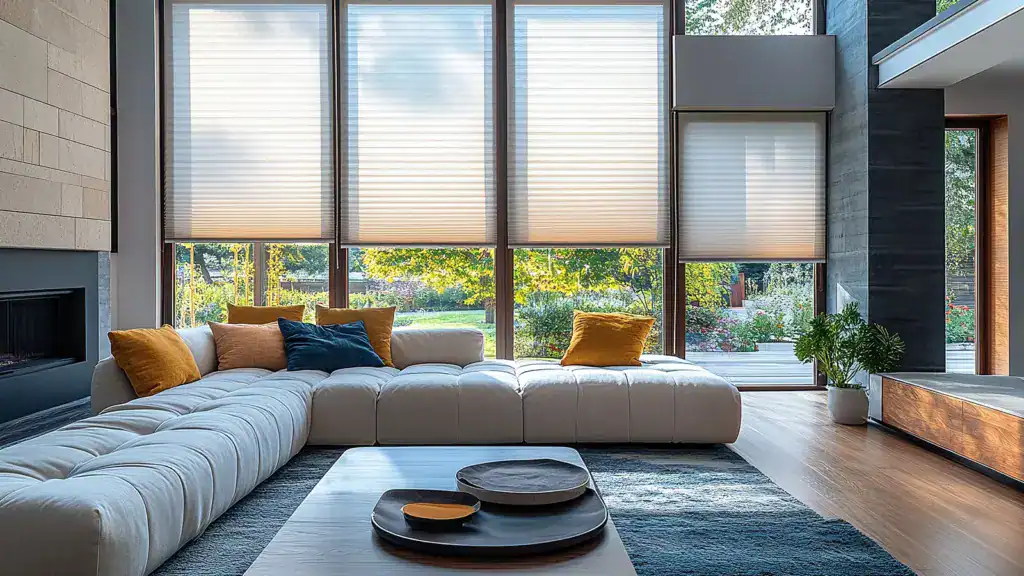
Cellular shades, often called honeycomb shades, are made from soft, spun-lace fabric. They feature a unique pleated design that forms distinct pockets or “cells.”
- Air trapping: The honeycomb cells capture dead air between the window pane and your room.
- Insulating layer: Trapped air acts as an excellent thermal insulator, slowing heat transfer.
- Cell variations: They come in single, double, or even triple-cell construction. More cells provide higher insulation values.
Insulation Benefits & Seasonal Performance
Here’s how both options perform across different seasons.
Winter Heat Retention
- Cellular Shades: These offer the highest R-value (a measure of thermal resistance) of any non-rigid window covering. The cellular pockets prevent indoor heat from escaping through cold glass.
- Plantation Shutters: Wood and solid composites are natural insulators. When fully closed, they form a thick, protective wall against freezing temperatures and icy drafts.
Summer Heat Blocking
- Cellular Shades: Light-filtering or blackout cellular shades reflect solar heat away from the window. The air pockets stop radiant heat from baking your rooms.
- Plantation Shutters: Shutters excel at blocking intense sunlight. You can angle the louvers upward to let natural light hit the ceiling while keeping harsh UV rays and direct heat out of your living space.
Light Control & Privacy
Controlling Natural Light
- Plantation Shutters: These provide unmatched flexibility. You can swing the panels completely open, close them tight, or tilt the louvers to any precise angle.
- Cellular Shades: These generally operate on a binary system — they’re either pulled up or pulled down. Top-down/bottom-up cellular shades offer slightly more control, allowing light in through the top while keeping the bottom covered.
Managing Privacy
- Plantation Shutters: Angling the louvers blocks the view from the street while still allowing light and air to flow into the room.
- Cellular Shades: When lowered, they provide total privacy. However, you lose your outside view completely when they’re closed.
Aesthetics & Home Value
Visual Appeal
- Plantation Shutters: They offer a classic, architectural look. Shutters are often viewed as a premium upgrade and look built-in to the home.
- Cellular Shades: These provide a soft, minimalist aesthetic. They stack tightly at the top of the window when raised, virtually disappearing from view.
Property Value Impact
- Plantation Shutters: Because they are custom-fitted and permanently attached to the window frame, appraisers often consider shutters a fixture. They can increase your home’s resale value.
- Cellular Shades: These are considered soft furnishings. While they look great and help sell a home faster, they typically don’t add to the appraised value of the property.
Maintenance & Durability
Cleaning Requirements
- Plantation Shutters: Very easy to maintain. You simply wipe the solid louvers with a damp cloth or a microfiber duster.
- Cellular Shades: These require more care. Dust can settle inside the honeycomb cells. You need to use the brush attachment on your vacuum to clean them gently, and stains can be difficult to spot-clean from the fabric.
Expected Lifespan
- Plantation Shutters: Extremely durable. High-quality composite or wood shutters can last 20 to 30 years with minimal wear. They resist warping and fading.
- Cellular Shades: Fabric shades degrade over time due to UV exposure and daily lifting and lowering. Expect to replace them every 7 to 10 years.
Installation Considerations & Cost-to-Value
Upfront Costs
- Plantation Shutters: These require a higher initial investment due to the materials and custom manufacturing.
- Cellular Shades: Generally much more affordable upfront, making them a great option if you need to cover every window in a large house on a strict budget.
Long-Term Value
- Plantation Shutters: The high upfront cost is offset by their longevity and the potential increase in home value. Their solid construction provides steady energy savings year after year.
- Cellular Shades: The immediate energy savings are significant, especially with double-cell designs. However, you’ll likely need to replace them at least once, and possibly twice, over a 20-year period.
Conclusion
Both plantation shutters and cellular shades boost energy efficiency, but they shine in different ways. Cellular shades deliver the best insulation thanks to their honeycomb design, making them ideal for maximum temperature control on a budget.
Plantation shutters provide strong heat and draft protection while offering greater durability, easier upkeep, and added home value.
Choose cellular shades for top-tier insulation. Choose plantation shutters for a long-lasting, low-maintenance upgrade that combines comfort with style.
FAQs: Cellular Shades vs. Plantation Shutters
Q: Do cellular shades or plantation shutters lower energy bills more?
Cellular shades typically offer slightly higher energy savings because their honeycomb cells trap dead air, creating a superior thermal barrier. However, well-fitted plantation shutters also provide significant savings by blocking drafts and solar heat gain.
Q: Can I use both cellular shades and plantation shutters together?
No, it isn’t practical to use both on the same window. Plantation shutters mount inside or directly outside the window frame, leaving no clearance for properly operating a cellular shade.
Q: Are plantation shutters good for winter insulation?
Yes. Shutters act as a solid barrier. When fully closed, they block cold drafts from entering the room and prevent indoor heating from escaping through the glass.
Q: How do blackout cellular shades differ from light-filtering ones for energy efficiency?
Blackout cellular shades usually feature a metallic lining inside the cells. This lining blocks light completely and reflects radiant heat better than unlined fabric, offering a slight boost in insulation.
Q: Do plantation shutters fade in the sun?
High-quality faux wood and composite shutters are treated with UV-resistant finishes to prevent fading and yellowing. Natural wood shutters may fade slightly over many years of intense, direct sunlight.
Q: Are cellular shades suitable for bathrooms or kitchens?
Standard fabric cellular shades aren’t ideal for high-humidity areas because they absorb moisture and odors. If you want energy efficiency in a bathroom, composite plantation shutters are a better choice because they resist water and warping.
Q: How do I clean dust out of cellular shade pockets?
Use a vacuum cleaner with a soft brush attachment on a low suction setting. Gently run the brush horizontally across the pleats to remove dust without crushing the fabric cells.
Q: Do plantation shutters actually increase home value?
Yes. Because they are custom-built, permanently installed fixtures, appraisers and homebuyers generally view plantation shutters as a premium home upgrade that adds to the property’s overall value.