Best Window Treatments for West-Facing Windows in Hot Climates
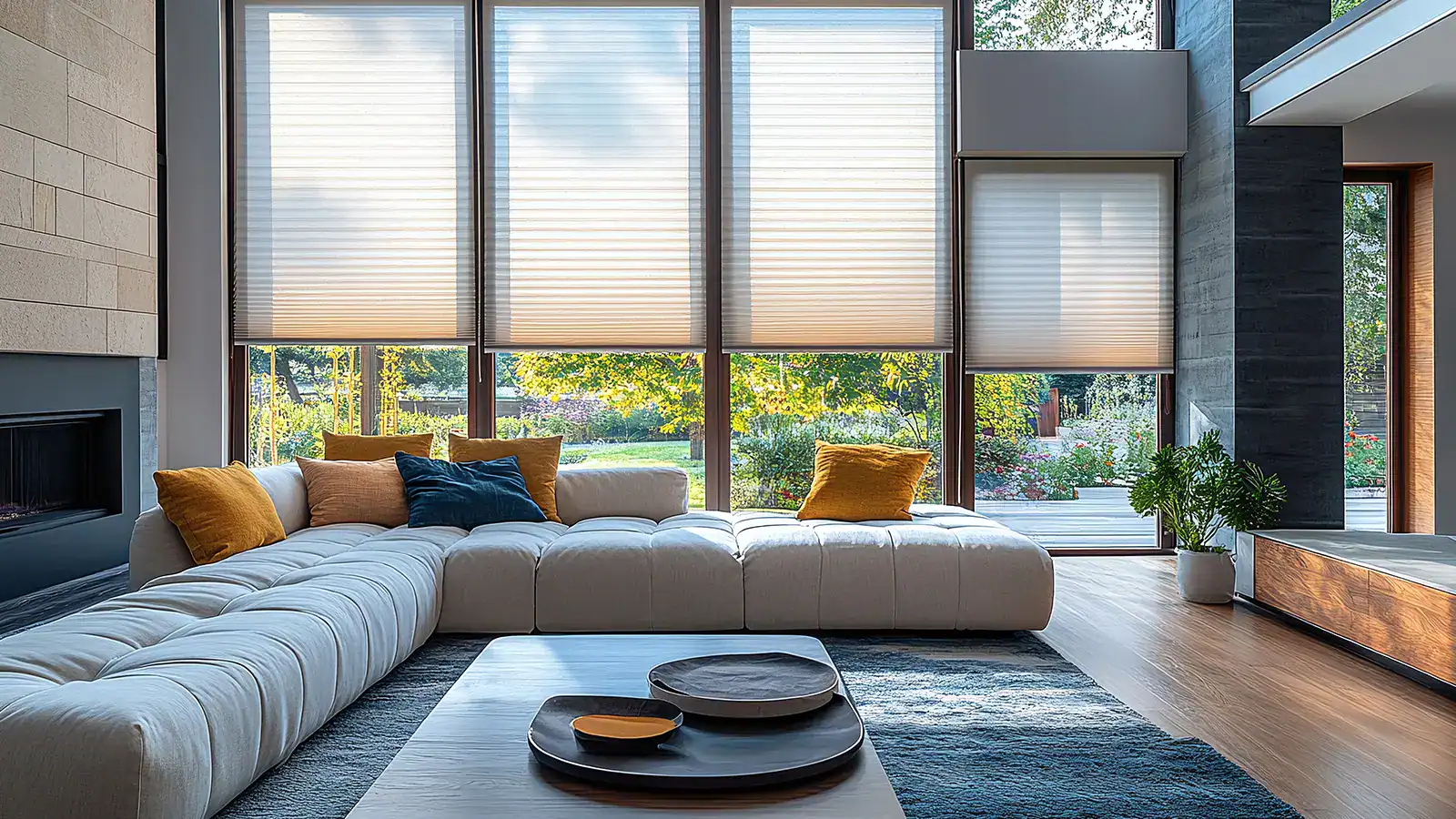
Does your living room feel more like a sauna than a sanctuary? West-facing windows offer killer sunsets, but they also bring brutal heat, blinding glare, and fading furniture.
Standard blinds won’t cut it when the afternoon sun hits — you need a strategy that keeps your home cool and your energy bills low.
In this guide, you’ll discover:
- The West-Window Challenge: Why these windows are your home’s biggest heat leak.
- The Power Players: Window treatments engineered to block UV rays and heat.
- The Perfect Fit: How to choose the best style for your space.
Why West-Facing Windows Need Special Attention
West-facing windows take a massive beating from the sun during the hottest part of the day.
Unlike morning sun, late afternoon sunlight carries the accumulated heat of the day. This creates three primary issues for your home:
- Severe heat gain: Sunlight enters through the glass and is absorbed directly as heat. This forces your air conditioner to work much harder to keep the house cool.
- Blinding glare: The low angle of the late afternoon sun points directly into your home. This makes watching television, reading, or working on a computer screen nearly impossible without proper coverage.
- Intense UV damage: Prolonged exposure to direct UV rays destroys your interior. Over time, it fades expensive hardwood floors, bleaches furniture fabrics, and damages artwork.
Top Window Treatments for Sun Control
In this section, you’ll learn about the most effective window coverings for hot climates, broken down by their features and benefits.
Cellular Shades (Honeycomb Shades)
Cellular shades trap air inside their unique honeycomb-shaped cells. This creates a powerful layer of insulation between the hot window glass and your cool room.
They’re widely considered one of the best defenses against extreme temperatures.
- Energy-efficiency benefits: Excellent. They block heat transfer significantly better than most standard options.
- Light control: Available in light-filtering and full blackout fabrics.
- Privacy: Even light-filtering options offer complete privacy from the outside.
- Pros: Highly insulating, lightweight, easy to operate, and clean-looking.
- Best use cases: Bedrooms, media rooms, and living spaces where you want maximum temperature control.
- Style considerations: Minimalist and modern. They stack tightly at the top of the window when raised, virtually disappearing from view.
Solar Shades
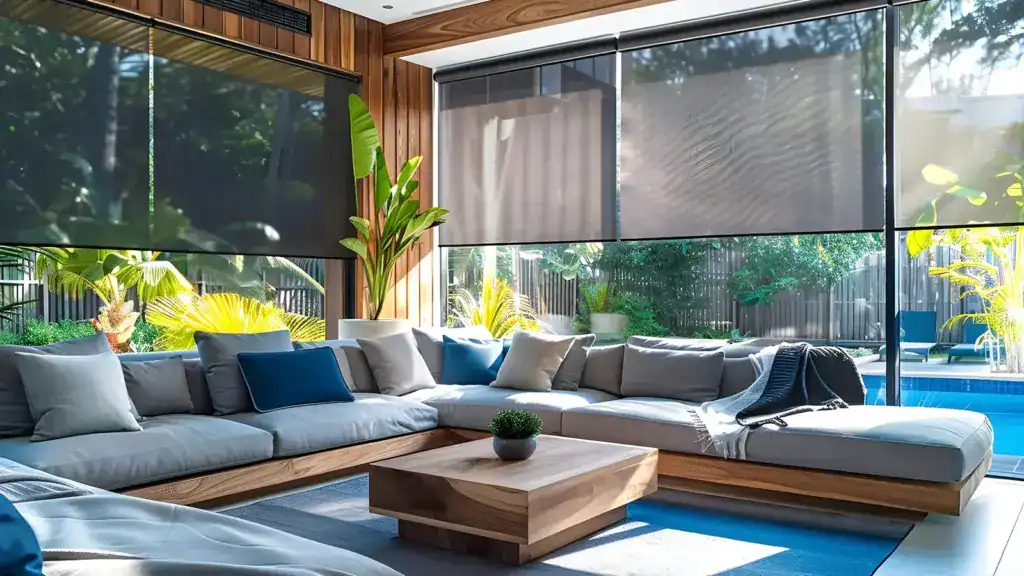
Solar shades use a woven mesh fabric that blocks UV rays while maintaining your view of the outdoors. The “openness factor” (ranging from 1% to 10%) determines how much light passes through the fabric.
- Energy-efficiency benefits: Good. They reduce heat gain and block up to 99% of damaging UV rays, depending on the fabric density.
- Light control: They cut harsh glare beautifully while still letting natural light filter into the room.
- Privacy: They don’t provide privacy at night. When the lights are on inside, people can see in.
- Pros: Preserves your view of the sunset, eliminates TV glare, and protects your furniture.
- Best use cases: Living rooms, kitchens, and sunrooms facing west where daytime views matter most.
- Style considerations: Sleek, low-profile, and contemporary. They roll up cleanly out of the way.
Plantation Shutters
Plantation shutters are permanent, solid window treatments built directly into the window frame. They’re highly durable and offer precise light control by tilting the louvers up or down.
- Energy-efficiency benefits: Very good. Solid wood or composite materials block heat effectively when fully closed. Composite shutters resist warping in extreme heat.
- Light control: Excellent. You can tilt the louvers to direct harsh light up toward the ceiling while maintaining brightness in the room.
- Privacy: Complete privacy when closed.
- Pros: Increases home value, extremely durable, and easy to wipe clean without removing them.
- Best use cases: Street-facing windows where curb appeal, durability, and privacy matter.
- Style considerations: Classic, architectural, and timeless. They add a permanent design element to the room.
Drapery Panels with Thermal Lining
Drapes add softness and texture to a room. When you pair thick fabric with a dedicated thermal lining, the result is an absolute powerhouse against afternoon heat.
- Energy-efficiency benefits: Excellent. Thick thermal lining blocks intense sunlight and prevents heat transfer.
- Light control: Maximum blackout capability when drawn completely closed.
- Privacy: Total privacy when closed.
- Pros: Highly customizable, dampens outside noise, and completely blocks heat entry.
- Best use cases: Bedrooms, formal dining rooms, and drafty spaces that need heavy insulation.
- Style considerations: Traditional, elegant, and decorative. They frame the window and add height to a room.
Roller Shades
Roller shades pull down from a single continuous roll of fabric. They’re a simple, clean, and highly effective way to cover a hot window without adding bulk to the space.
- Energy-efficiency benefits: Moderate to high. This depends entirely on the fabric thickness and whether the street-facing side has a reflective backing.
- Light control: Ranges from slightly sheer to complete blackout.
- Privacy: Full privacy when lowered, assuming a non-sheer fabric is chosen.
- Pros: Simple operation, highly budget-friendly, and very easy to motorize.
- Best use cases: Kitchens, bathrooms, and casual living spaces where straightforward functionality is the goal.
- Style considerations: Uncluttered and modern. They fit seamlessly into almost any interior design aesthetic.
Layered Treatments
Sometimes, a single treatment isn’t enough to handle brutal afternoon heat. Layering combines two solutions — like installing a sleek solar shade underneath thick thermal drapery panels.
- Energy-efficiency benefits: Superior. Two distinct layers trap more air and block significantly more heat than one alone.
- Light control: Ultimate flexibility. Keep the shade down during the day to cut glare, then pull the drapes shut at night.
- Privacy: Adapts to your needs.
- Pros: Solves multiple problems at once and adds immense depth to the room’s design.
- Best use cases: Large living rooms or primary bedrooms in extremely hot climates like Southern California, Arizona, or Texas.
- Style considerations: Rich, highly customized, and high-end. Layering creates a designer finish.
How to Choose the Right Treatment
Ask yourself these five straightforward questions to narrow down your choices:
- Do you need nighttime privacy?
If yes, skip standalone solar shades. Choose cellular shades, roller shades, or plantation shutters instead. - Is keeping your view important?
If you have a gorgeous sunset view you want to keep, go with a solar shade. Choose an openness factor of 1% to 3% for maximum heat blocking while maintaining the view. - Do you need to sleep in this room?
Bedrooms require darkness. Use blackout cellular shades or thermal-lined drapery to block both afternoon heat and early morning light. - Are the windows hard to reach?
For tall west-facing windows or windows behind heavy furniture, prioritize motorized roller or cellular shades. A remote control ensures you can use them every day. - What is your budget?
Roller shades and cellular shades offer the most affordable path to high-efficiency cooling. Plantation shutters require a larger upfront investment but last for decades.
FAQs: Window Treatments for West Windows
Q: What’s the best color for window treatments on west-facing windows?
White or light-colored backings are the most effective. Light colors reflect solar heat away from the window, whereas dark colors absorb the heat and radiate it into your room.
Q: Do solar shades provide privacy at night?
No. Solar shades are essentially a mesh screen. During the day, you can see out, and people can’t see in. At night, when it’s dark outside, and your interior lights are on, the effect reverses.
Q: Can I use real wood blinds on hot west-facing windows?
Real wood can warp, crack, or fade when exposed to constant, intense, direct sunlight and heat. Faux wood or composite materials are a much safer choice.
Q: What’s the single most energy-efficient window treatment?
Cellular shades (honeycomb shades) are generally rated as the most energy-efficient internal window treatment. Their unique trapped-air pocket design acts as a powerful barrier against heat transfer.
Q: How does the openness factor work on a solar shade?
The openness factor refers to the tightness of the fabric weave. A 1% openness factor blocks 99% of UV rays, letting in very little light. A 10% openness factor blocks 90% of UV rays, letting in more light and offering a clearer view outside.
Q: Are plantation shutters good for blocking heat?
Yes. Because they’re thick, solid barriers built tight to the window frame, they block heat exceptionally well. When the louvers are fully closed, they completely block direct sunlight from entering the room.
Q: How do layered window treatments help with insulation?
Layering creates multiple barriers. When you place a shade close to the glass and add drapery over the top, you create multiple pockets of dead air. Dead air is one of the best insulators for a home.
Q: Should I motorize my west-facing window shades?
Yes, if your budget allows. Motorization makes it incredibly easy to lower the shades precisely when the afternoon sun hits. You can even set them on automated timers so your home stays cool while you’re at work.