The Science Behind Light-Filtering Fabrics
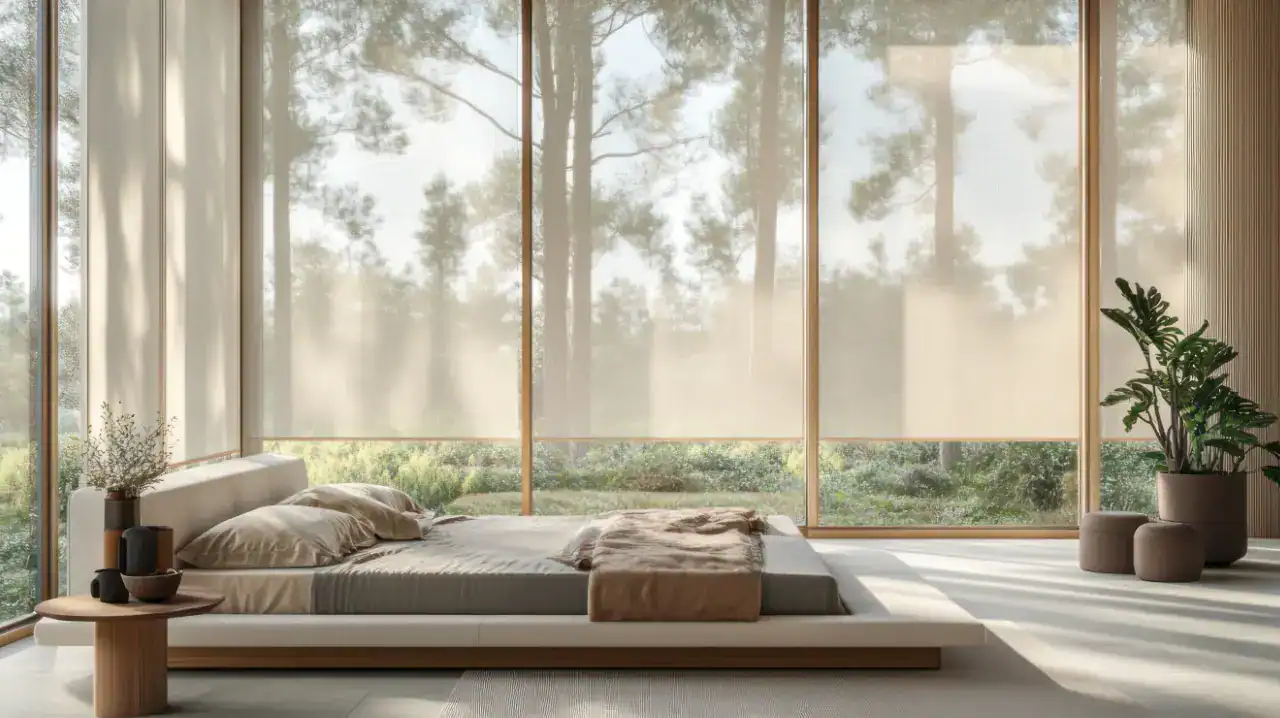
Light shapes a room’s mood, and the right window treatment lets you control it precisely. Enter light-filtering fabrics, the stars of this blog.
Light-filtering fabrics are engineered to diffuse sunlight, reduce glare, protect against UV rays, and maintain privacy without darkening your space.
Choosing the right one is more about performance than color or style.
Let’s pull back the curtain on the science of it all.
How Light Interacts with Fabric
When light hits a surface, it’s reflected, absorbed, or transmitted. The balance between these three factors determines how much light passes through a fabric.
- Reflection: Light bounces off the fabric’s surface. Lighter-colored and smoother fabrics tend to reflect more light.
- Absorption: The fabric’s fibers absorb some of the light energy, converting it into a small amount of heat. Darker colors are particularly good at absorbing light.
- Transmission: The light that passes through the fabric and into the room. Light-filtering fabrics maximize this process in a controlled, diffuse way.
A light-filtering fabric allows light to pass while scattering it. This scattering effect is what turns a direct, harsh sunbeam into soft, ambient light.
Key Materials Used in Light-Filtering Fabrics
While many materials can be used, some are more common due to their inherent properties.
Natural Fibers
- Cotton can be woven in various thicknesses. A loosely woven cotton, like voile or sheer, allows plenty of light to enter, while its soft, natural texture helps diffuse it.
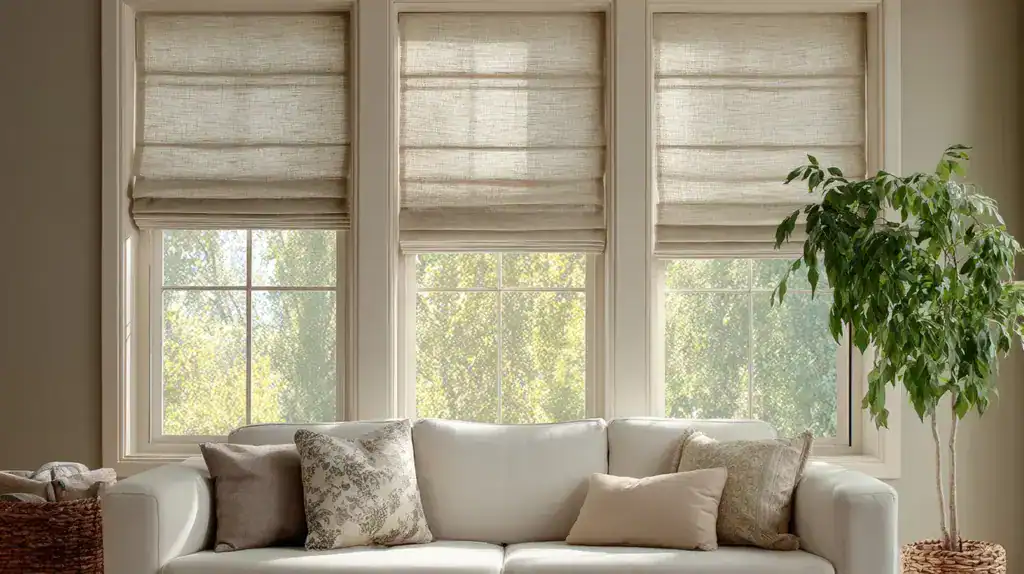
- Linen has a textured, slightly irregular weave, which creates a relaxed, airy feel. The natural slubs and open weave of linen fabric scatter light, reducing glare while maintaining brightness.
- Silk: Certain types, like organza, are fantastic light-filtering materials. They’re lightweight and have a crispness that holds shape, combined with a natural sheen that catches and disperses light.
Synthetic Fibers
- Polyester is durable, resistant to wrinkles and fading, and holds its shape well. It can be manufactured with specific light-transmitting properties and is often blended with natural fibers to add strength.
- Rayon is a semi-synthetic fiber made from cellulose. It can mimic the feel of silk, cotton, or linen. It drapes well and can be woven into sheer fabrics.
- Nylon is similar to polyester. It’s strong and durable, is often used in sheer fabrics, and can be treated to have different levels of translucency.
Most light-filtering fabrics you find today, especially for window shades and blinds, are made from polyester or polyester blends. These materials offer the best combination of performance, durability, and cost-effectiveness.
Weave & Construction: The Real Magic
Material is only half the story. How those fibers are woven together — the fabric’s construction — greatly influences its ability to filter light.
Weave Density
The tightness or looseness of a weave is called its density.
- Fabrics with a loose or open weave, like sheers and voiles, have more space between the yarns. This allows a significant amount of light to pass through directly. The threads themselves help to scatter and soften the light.
- Tightly woven fabrics have less space between yarns, blocking more light. While a very tight weave results in a blackout fabric, a moderately tight weave can be light-filtering. It will allow less light through but offer more privacy.
Yarn Type & Texture
The yarn’s characteristics also influence light diffusion.
- Smooth, fine yarns (like those in polyester sheers) create a more uniform, even light diffusion.
- Yarns with a rougher texture or intentional irregularities (like slub linen) scatter light. Many homeowners prefer this more dynamic, natural-looking diffusion.
Think of it like the difference between a clear window and a frosted one. Both transmit light, but the frosted glass (like a textured fabric) scatters it, obscuring the view and softening the intensity.
Advanced Fabric Technologies
In addition to basic materials and weaves, manufacturers use specialized technologies to enhance light-filtering properties.
Openness Factor
The openness factor is a percentage indicating the amount of open space in the weave.
- A low openness factor (e.g., 1-3%) means a tighter weave. It blocks more UV rays and offers more privacy, but allows less visible light through.
- A high openness factor (e.g., 10-14%) means a looser weave. It lets in more light and provides a clearer view to the outside, but offers less privacy and UV protection.
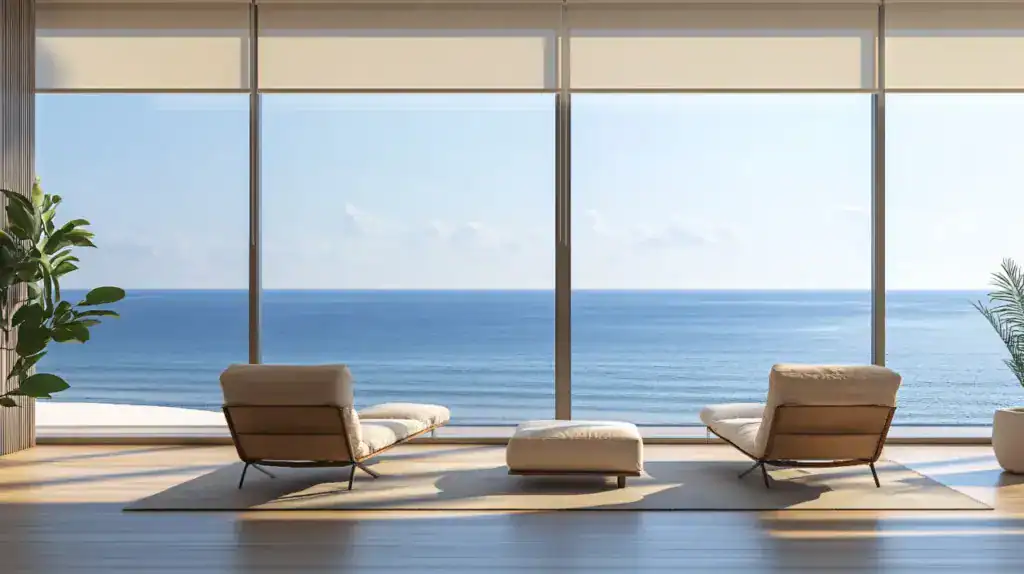
A typical light-filtering solar shade might have an openness factor of 3-5%, striking a balance between light, view, and protection.
Fabric Layering & Bonding
Some modern light-filtering solutions involve multiple layers. For instance, some cellular shades are made from a single cell of spunlace polyester. This non-woven fabric is created by bonding fibers together rather than weaving them. The structure itself is designed to diffuse light as it passes through the cell, providing insulation and soft illumination simultaneously.
Benefits of Light-Filtering Fabrics
- Soft, diffused light is easier on the eyes. It reduces glare on TV screens, computer monitors, and other reflective surfaces, making your living spaces more comfortable and functional.
- Light-filtering fabrics obscure the view from the outside during the daytime. While silhouettes might be visible at night when interior lights are on, they offer a solid layer of privacy without sacrificing natural light.
- Sunlight contains ultraviolet (UV) rays that can fade furniture, flooring, and artwork over time. Light-filtering fabrics can block a significant percentage of these harmful rays — often up to 99% — preserving your home’s interior.
- The soft glow created by these fabrics adds warmth and character to a room. It can make a space feel larger, more open, and more inviting.
- By reducing the amount of direct solar heat entering a room during the summer, these fabrics can keep your home cooler and lessen the load on your air conditioning system.
Do you need more light or more privacy? Is UV protection your top priority? Answering these questions will guide you to the perfect material, weave, and openness factor for your needs.
FAQs: Light-Filtering Fabrics
What’s the difference between light-filtering and room-darkening fabrics?
Light-filtering fabrics are designed to diffuse sunlight while reducing glare. Room-darkening fabrics block significantly more light, creating a dim environment, but may still have small light gaps. Blackout fabrics, a step further, will block nearly 100% of light.
Can you see through light-filtering fabrics at night?
Yes, to some extent. During the day, you can’t easily see into a home through light-filtering shades. However, at night, when the lights are on inside, silhouettes and shadows will be visible from the outside. If complete nighttime privacy is a concern, consider layering with drapes or choosing a different fabric.
Are light-filtering fabrics good for energy efficiency?
Yes, by blocking direct sunlight and a portion of solar heat, they help keep rooms cooler in the summer. Some styles, such as cellular shades, also provide an insulating layer that slows heat loss in winter.
What are the best materials for light-filtering shades?
Polyester is the most popular and practical material due to its durability, UV resistance, and ease of cleaning. Natural fibers like linen and cotton, while elegant, may require more care.
How do I clean light-filtering fabrics?
Most polyester-based fabrics can be cleaned by regular dusting or gentle vacuuming with a brush attachment. For minor stains, you can often spot-clean with a damp cloth and mild detergent. Always check the manufacturer’s instructions, as some delicate natural fibers may require professional cleaning.
What does “openness factor” mean for a fabric?
The openness factor is a percentage that measures the amount of open space in the weave of a screen or solar shade fabric. A lower percentage (e.g., 3%) indicates a tighter weave that blocks more light and provides greater privacy. A higher percentage (e.g., 10%) offers a clearer view outside but lets in more light.
Can light-filtering fabrics completely block UV rays?
High-quality light-filtering fabrics can block up to 99% of them, protecting furniture, floors, and artwork.
Are sheer curtains considered light-filtering?
Yes, sheer curtains are a type of light-filtering window treatment. They have a very open weave and are often used for a decorative, airy effect or layered with heavier drapes.